


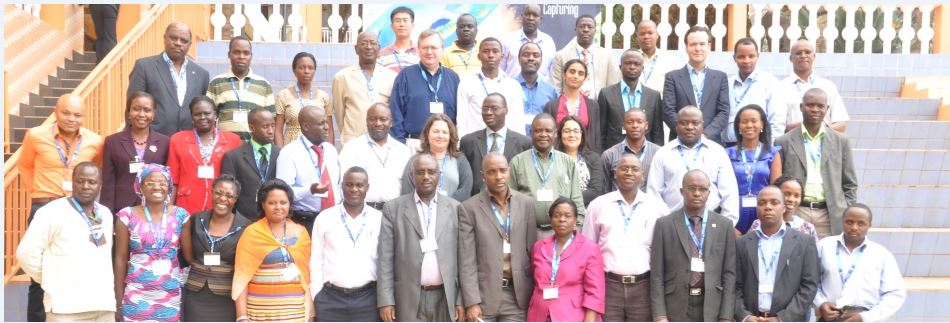
 Following on from the Kigali Wetlands Forum held in Kigali in July 2013, a subsequent meeting focussing on the valuation of wetlands was held in Kampala between 25 and 27th November. The meeting was organised by UNESCO-IHE in collaboration with the local host, the Ramsar Centre for East Africa (RAMCEA), and UNEP-TEEB Office, the International Union for Nature Conservation (IUCN) Netherlands Committee and the Institute for European Environmental Policy (IEEP). The workshop was built around the Ramsar and UNEP TEEB for water and wetlands report (Russi et al., 2013). Globally wetlands are declining, facing pressures of conversion for agriculture, encroachment from informal settlements, poor landscape planning and piecemeal degradation, the services wetlands provide are being overlooked. The TEEB for water and wetlands report has highlighted not only the value of wetlands, but how to assess their value. It is a milestone for wise planning for wetland management.
The Kampala workshop brought about 50 participants from 15 African countries. Geographical spread focused on East Africa, but also included key partners from Southern and Western Africa. Potential participants were nominated by UNESCO-IHE, RAMSAR, RAMCEA, UNEP, NBCBN and Cap-Net. Participation was based on a selection process that focussed on the potential for further dissemination of material and concepts of wetland valuation and wise use. Two places were reserved for “future wetlands managers” and awarded to deserving students from Makerere University
Workshop Materials
- Concept Note
- Workshop Programme
- Workshop Report
- Workshop Evaluation
- Blog article written by Andrew Farmer
- TEEB Web article
 How a tiny, spotted insect is helping farmers in Pakistan’s Balochistan province fight back against pests, without a single drop of chemical pesticide.
 IWMI’s Niranga Alahacoon spoke to Channel Eye of the Rupavahini Corporation about the ENSO Outlook, explaining how Sri Lanka can use the tool to prepare for climate risks.
 After a year of engagement, IWMI researchers give a behind-the-scenes look at how they ensure water plays a bigger role.
 Key takeaways from World Water Week 2026 and what they mean for the 2026 UN Water Conference and beyond.
 IWMI's Amare Hailesellasie highlighted that when addressing climate shocks like El Niño, water management is the first line of defense.